
Why Vanity Metrics Are Bleeding Your Revenue Dry
Visibility is often mistaken for viability, and that’s a mistake. Boardrooms across the world regularly review marketing reports showing thousands of video views, spikes in social engagement, and glowing impression counts.
Yet, when executive teams cross-reference these digital metrics with mid-week occupancy rates or cover counts, a troubling disconnect emerges: the digital engagement is high, but direct revenue remains stagnant.
This discrepancy stems from a fundamental shift in digital media consumption: the hospitality attention crisis. Marketing strategies built on historical social media algorithms no longer drive commercial outcomes. To protect margins and capture market share during peak seasonal trading periods, hospitality leaders must transition their organisations from hunting passive impressions to capturing cognitive focus.
The Architecture of the Attention Crisis
To understand why traditional social media campaigns fail to yield bookings, executive teams must examine the underlying mechanics of consumer attention online.
Research from Dr Gloria Mark at the University of California, Irvine, reveals that the average human attention span on a digital screen has plummeted from 2.5 minutes in 2004 to a mere 47 seconds today. On social platforms, the filter is even more aggressive. Meta and TikTok report that algorithms determine whether a piece of content is pushed to a broader audience based on a user’s behaviour within the first two to three seconds.
This dynamic has created three strategic vulnerabilities for hospitality brands:
- 1. Ghost Attention: Social platforms rely on auto-play features. A report showing 50,000 views frequently measures zombie scrolling—where an ad loads on a screen, but the user’s brain fails to process the brand identity or message.
- 2. The Engagement Trap: In an effort to stop the scroll, internal marketing teams often resort to generic trends, humorous skits, or shock-value content. While these assets generate likes, they fail to establish commercial intent. The brand endears itself to digital spectators with zero intention of booking a table or reserving a suite.
- 3. Cognitive Overload: Consumer decision fatigue is at an all-time high. Meta indicates that 42% of online shoppers abandon purchases due to friction and choices presented during the journey. When hospitality brands push complex, unsegmented messages to overwhelmed consumers, conversion rates drop dramatically.
THE ENGAGEMENT TRAP
High Views / Likes
Zero Brand Recall
£0 Revenue
“Focusing on entertainment without commercial intent yields passive spectators, not paying guests.”
Redefining the Metrics That Matter
To insulate your organisation against squandered marketing spend, leadership must focus on the following key performance indicators:
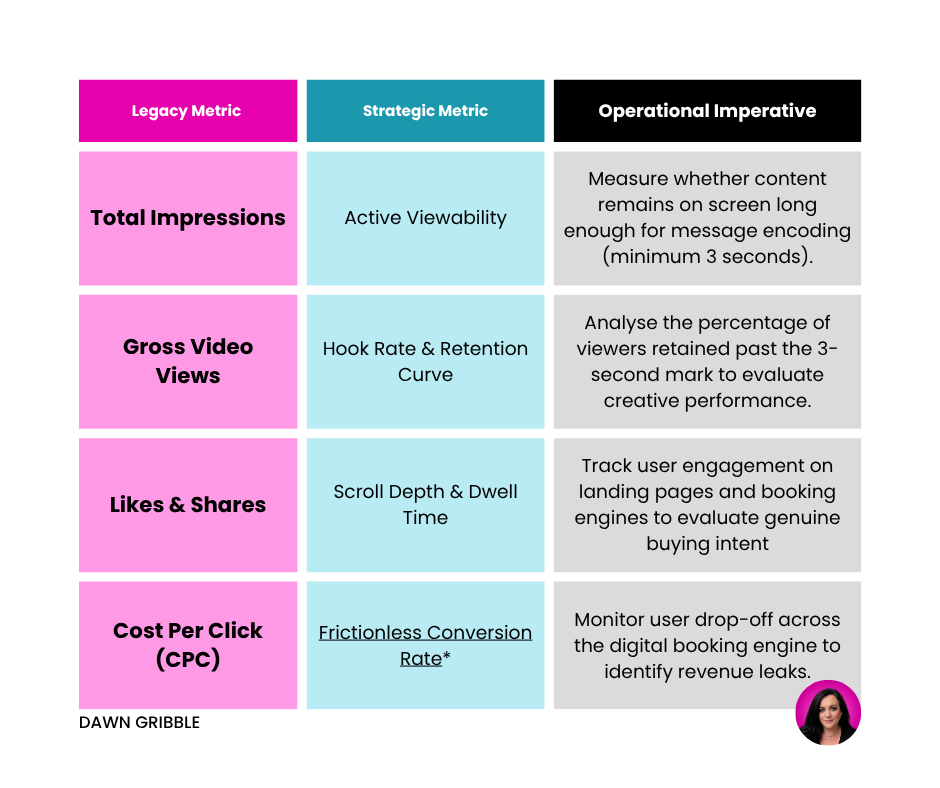
Strategic Imperatives for Hospitality Executives
Overcoming the attention crisis requires an operational overhaul of how hospitality content is planned, created, and distributed.
1. Shift from Demographic Targeting to Mood-State Mapping
Demographic targeting e.g., professionals aged 30–45 tell you who your guest is, but not *why* or *when* they will buy. High-performing targeting strategies map content to the guest’s immediate emotional and cognitive state:
- Is the prospective diner looking for rapid relief from mid-week decision fatigue?
- Is the corporate booker seeking operational reassurance for an upcoming event?
- Is the leisure guest looking for visual escape during their commute?
Your content must match the mental context of the user on each specific channel.
2. Eliminate Friction in the Booking Funnel
Capturing active attention online is useless if your operational booking journey creates cognitive friction. If a guest clicks a sleek campaign video and is directed to an unoptimised, slow-loading third-party booking engine with multiple upsell pop-ups, conversion drops off a cliff. Audit your digital touchpoints quarterly to ensure brand alignment and technical efficiency from click to confirmation.
3. Demand Channel-Native Execution
Blindly cross-posting identical creative across TikTok, Instagram Reels, YouTube Shorts, and LinkedIn ignores platform context. A user on LinkedIn expects strategic clarity; a user on TikTok demands unpolished, kinetic authenticity. Enforce a strict policy of channel-native formatting across your internal teams and agency partners.
Drive Sustainable Revenue Growth
In a hyper-competitive trading environment, hospitality brands cannot afford to waste capital entertaining audiences who never convert. By auditing your marketing function, eliminating vanity metrics, and restructuring your digital asset execution around active attention, you secure a decisive commercial advantage.
Is your marketing driving demonstrable revenue or just generating noise?