
Executive Summary: Key Takeaways
- Audit Five Critical Touchpoints: Map where friction, choice overload, and decision fatigue quietly erode conversions across the guest discovery, booking, pre-arrival, on-property, and post-stay stages.
- Optimise Choice Architecture: Reduce cognitive strain on direct channels by setting smart defaults, curating room and menu tiers, and eliminating unnecessary decision steps.
- Drive Operational Revenue: Turn passive browsing into confirmed direct bookings and higher on-property spend by designing clear, frictionless paths to purchase.
Understanding the Decision Making Process
Every senior operator recognises the operational discipline required to run a commercial kitchen or manage front-of-house service during peak covers. Timings are calibrated to the second, mis-en-place is inspected rigorously, and unnecessary physical steps are stripped out of the line to ensure the brigade moves with absolute efficiency.
Yet, when we examine how those same hospitality businesses present their commercial offers online, that operational discipline routinely evaporates.
Boutique hotels and high-end restaurants pour considerable capital into driving qualified traffic to their digital real estate, only to force prospective guests through an obstacle course of cognitive fatigue, confusing options, and defensive policy declarations. When conversions falter, the instinctive commercial reaction is almost always economic: operators drop rates, introduce margin-eroding flash promotions, or lean heavily on online travel agents to fill the deficit.
This is a misdiagnosis of the problem. Your guests are rarely refusing to spend; rather, your booking environment introduces excessive behavioural friction at the precise psychological moments where they require clarity and reassurance. To regain command of your margins, you must conduct a rigorous behavioural friction audit across every stage of the decision-making process.
The Psychology of Decision Latency in Hospitality
In our deep dive into The Psychology of Decision Making, we explored how modern hospitality revenue systems have become data-rich but psychology-poor. Algorithmic dynamic pricing frequently triggers sharp consumer loss aversion, ignoring the empirical reality that guests experience the friction of a price rise twice as acutely as the pleasure of an equivalent discount.
When this dynamic is coupled with poorly structured choice architecture, decision latency spikes. Prospective guests do not simply deliberate; they abandon the session. In behavioural science, the friction that prevents commitment falls into three specific operational categories:
- Cognitive Load Overload: Presenting prospective bookers with an unstructured catalogue of inventory, forcing them to manually calculate the differences between nuanced room categories or package inclusions.
- Evaluation Paralysis: Violating the framing effect by failing to establish clear psychological anchors, leaving the guest with no intuitive baseline to determine what represents proper value.
- Trust Erosion: Injecting defensive, legalistic cancellation conditions or sudden hidden charges right at the final payment threshold, transforming an emotional lifestyle purchase into an adversarial transaction.
Auditing the Five Friction Touchpoints
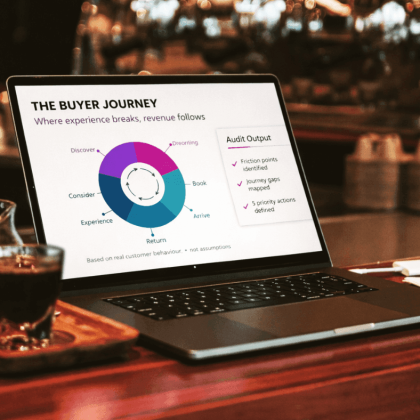
To evaluate where your direct digital journey is shedding profitable bookings, assess your operation against the five core psychological decision stages:
1. The Mental Simulation Phase
Before a guest evaluates practicalities, their subconscious runs a predictive simulation of the stay or dining experience. Audit your top-of-funnel creative assets. If your photography and copy lead with technical dimensions, clinical floor plans, or aggressive discount flags, you interrupt this simulation. You force the prospective guest to shift prematurely from an emotional, receptive mindset into an analytical price-checking frame. Ensure your imagery highlights sensory sanctuary, ambient atmosphere, and experiential relief.
2. The Choice Architecture Phase
Review your booking engine’s inventory display. If you force a corporate traveller or leisure guest to scroll past fourteen competing room and breakfast configurations, you trigger the classic paradox of choice. Highly profitable hospitality businesses limit visible friction by curating clear defaults. Designate your premier commercial packages clearly—such as “Our Curated Weekend Itinerary”—to anchor the selection process and guide the decision path naturally.
3. The Anchor and Chunking Phase
Examine your pricing ladder. Are your menu items or room tiers displayed as an undifferentiated list of prices? Behavioural economics dictates that buyers rely on reference points. Without a high-value anchor—such as a master penthouse suite or a premier dry-aged sharing cut—your mid-tier and high-margin signature options lack context. Break your inventory into intuitive, digestible chunks to minimise cognitive strain during the evaluation.
4. The Final Commitment Phase
Examine the exact psychological cues present when the card is in the guest’s hand. If your final payment screen introduces unexpected facility fees or opens with aggressive, combative cancellation policies, you trigger instant buyer hesitance. Reframe your booking policies around mutual respect and operational care rather than defensive merchant protection.
5. Post-Transaction Confirmation
Audit the immediate post-booking experience. If your communication drops into total silence until arrival, or sends only a cold, system-generated transactional receipt, you leave the door open for post-purchase dissonance. Reassure the guest immediately with tailored, high-touch pre-arrival communication that validates their choice
Operationalising the Findings
Eliminating behavioural friction is not an aesthetic exercise; it is an immediate margin protection strategy. When your direct booking engine and digital menus align with how the human brain naturally processes choices, your conversion rates rise, your direct booking share expands, and your dependence on third-party intermediaries diminishes.
If you suspect that hidden psychological friction points, clunky choice architecture, or digital disconnects are eroding your direct revenues, it is time to subject your entire booking ecosystem to professional scrutiny. Book a comprehensive DG Consulting Customer Experience Audit to uncover the operational and psychological leaks draining your direct guest spend, and establish a clear, high-converting path from first click to arrival.
DG Consulting • Marketing Audits
Personally reviewed by Dawn Gribble, MCIM MIH
Hospitality Customer Experience Audit
Uncover where guest bookings drop off and where your marketing is causing friction across your physical and digital touchpoints.
- ✓
Bespoke Video Walkthrough: A recorded walkthrough of your guest journey across key contact points. - ✓
Priority Roadmap PDF: Five immediate, high-ROI actions to improve retention and spend. - ✓
7-Day Email Support: Direct Q&A window to assist your team with immediate implementation.
Check whether your business is a fit