
AI Search Disruption and Regulatory Enforcement
Two forces are altering how hospitality brands acquire guests and maintain margins: the rapid rise of conversational, agentic AI search engines that bypass traditional discovery channels, and aggressive regulatory enforcement by bodies like the UK Advertising Standards Authority (ASA) targeting automated environmental claims.
Operators who fail to realign their commercial and marketing operations risk becoming invisible to high-intent diners and travellers while simultaneously incurring costly compliance penalties.
Traditional Discovery vs. Agentic AI Discovery
Legacy Path
→
→
→
Modern Path
→
Gemini / Meta Muse
→
No Site Visit
The Disruption of Local Discovery by Conversational AI
Conversational AI interfaces—including Google AI Mode, ChatGPT, Perplexity, Claude, and Meta Muse are acting as autonomous digital concierges. These agents do not present a list of ten blue links; they synthesise options and execute bookings directly within the chat interface.
Recent industry data reveals that 74% of consumers now use AI to make food and dining decisions, with 62% stating a preference to order directly within an AI chat interface.
This behavioural change presents a fundamental challenge to venue visibility:
AI Visibility & Directory Accuracy
| Platform | Recommended Visibility / Accuracy Benchmark |
|---|---|
| Google Business Profile (Legacy) | ~36% Visibility |
| ChatGPT (Scraped Directory Data) | 1.2% Visibility |
| Gemini (Live Google Maps Sync) | 35.9% Visibility (at 100% Data Accuracy) |
| Unsynchronized Third-Party Scrapes | 68% Data Accuracy (High Risk of Exclusion) |
When an AI agent evaluates a venue, it prioritises accuracy above all else. If opening hours, menu prices, or address details vary across directories, the AI considers the data untrustworthy and omits the property from its recommendations. A recommendation that leads to a closed restaurant damages the AI platform’s credibility; consequently, confused algorithms simply default to competitors with unified data profiles.
Automated Greenwashing Traps Trigger Regulatory Risk
While search channels are evolving, regulatory oversight is tightening. Hospitality brands are increasingly facing legal scrutiny over environmental, social, and governance (ESG) claims—not due to deliberate malice, but as a result of relying on automated ad generation and third-party vendor descriptions.
The UK Advertising Standards Authority (ASA) has established clear precedents: generic environmental descriptors such as “Eco Resort”, “eco-conscious”, or “sustainable dining” are inherently misleading unless backed by immediate, explicit evidence accessible on the primary booking landing page.
Recent ASA Enforcement Precedents
| Operator | System Trigger / Excuse | Legal & Regulatory Outcome |
|---|---|---|
| Thomas Cook | Google AI tools auto-generated “Eco Resort” from dynamic search keywords. | Rule: Compliance cannot be delegated to third-party ad algorithms. |
| loveholidays | Used independent hotel supplier’s trading name directly in marketing materials. | Rule: Third-party supplier names count as direct environmental claims. |
| DialAFlight | Replicated “eco-conscious” from hotel factsheets into Meta Ad copy. | Rule: Claims must be fully detailed directly on the landing page. |
Operators can no longer attribute non-compliance to automated algorithms or vendor-provided content. If your marketing technology stack generates ad copy dynamically or pulls unverified inventory descriptions, your brand carries full legal liability for any resulting ASA sanctions and brand erosion.
Strategic Imperatives for Executive Leadership
To protect direct booking margins and mitigate regulatory risk, executive teams must institute three core operational changes:
- Centralise Data Architecture: Establish a single source of truth for location, menu, and pricing data across all global and regional directories to maintain 100% accuracy for real-time AI ingestion.
- Audit Marketing Technology Workflows: Immediately turn off dynamic ad insertion features that pull unverified third-party sustainability claims or generate dynamic copy without human oversight.
- Pivoting to Experiential Pricing: Combat inflationary pressure by moving away from straight price increases on standard items. Focus instead on high-margin, experiential packages—such as coastal micro-breaks or niche culinary masterclasses—where high-net-worth consumers demonstrate minimal price sensitivity.
Protect Your Venue’s Market Position
Is your commercial strategy prepared for agentic AI search and strict advertising compliance? Our Brand Reputation Audit can help.

£25.00
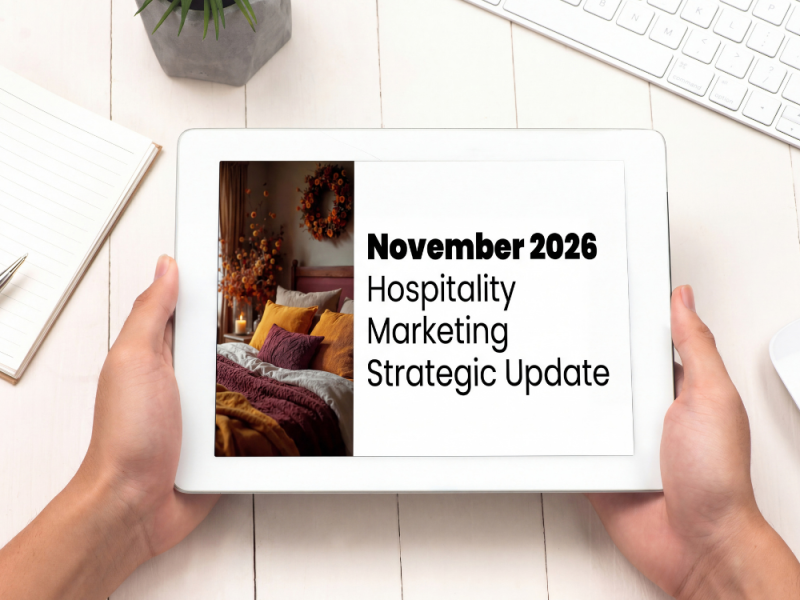
Hospitality Marketing Strategy November 2026
Navigate November revenue spikes, capture seasonal demand, and align execution with modern AI search and social video trends.
- ✓
Key Revenue Surge Analysis: Black Friday & Q4 trading data - ✓
AI Search Strategy: Optimise Google Maps & Gemini visibility - ✓
Tactical Toolkit: Day-by-day planner & master AI prompt models