The Real Cause of Declining Average Spend Per Head
Dining room covers across the casual dining and premium boutique hotel sectors remain robust, yet gross yields per cover are deteriorating. The primary commercial threat facing operators today is not an empty dining room; it is the silent erosion of spend per head caused by customer micro-trimming.
When consumers face sustained macroeconomic headwinds, their behavioural psychology shifts from complete abstention to defensive moderation. Diners continue to protect their core dining rituals, keeping reservations on the books. However, once seated at the table, they execute tactical budget reductions. They bypass pre-dinner cocktails, decline bread service, share single portions of side dishes, and substitute premium bottled mineral water with iced tap water.
Our analysis in the December 2026 Strategic Update highlights that dinner service frequency has seen a 46% decline in guest commitment, with lunch contracting by 37%. Diners who enter your dining room arrive with an invisible ceiling on their total bill. If your menu fails to account for this defensive psychology, your gross profit margins will steadily contract despite a bustling dining floor.
Where Traditional Menu Engineering Collapses
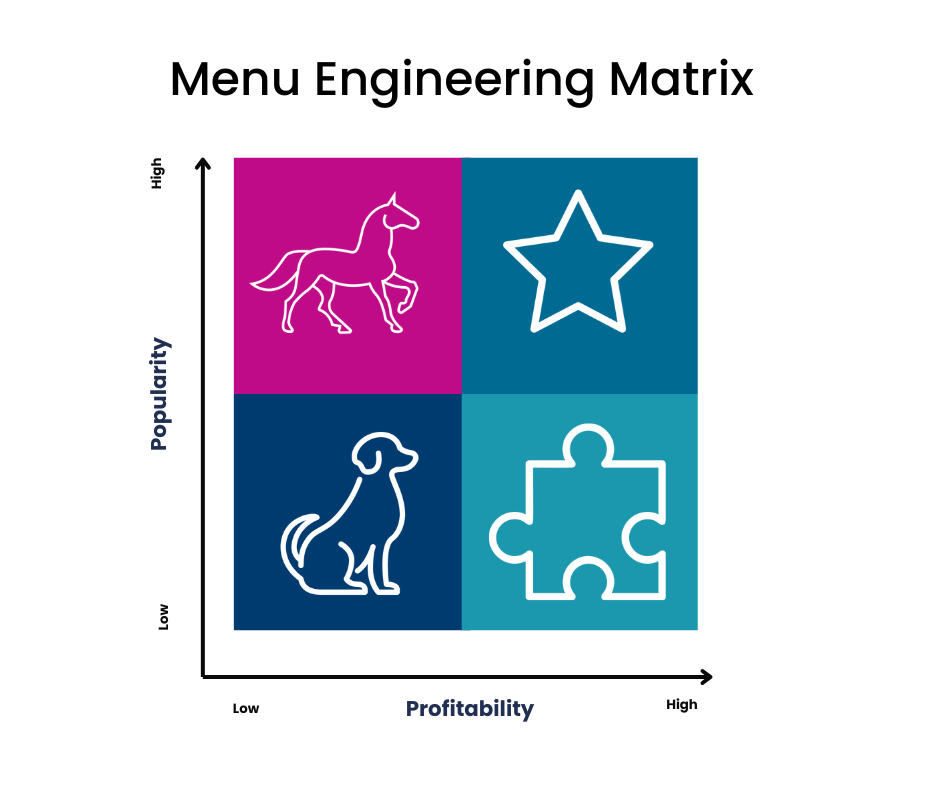
Most legacy menu engineering frameworks rely entirely on the classic Boston Consulting Group matrix: categorising dishes into stars, plough horses, puzzles, and dogs based purely on historical sales velocity and gross margin. In a volatile economic trading environment, this retrospective model fails.
Traditional engineering assumes static purchasing behaviour. It presumes that if a guest orders a high-margin steak, the menu typography and visual placement will naturally guide them to add a side of béarnaise sauce and a glass of Malbec. Micro-trimming breaks this assumption. When the consumer is actively looking for lines to delete from their mental tally, passive menu design gives them implicit permission to strip away high-margin items.
The conventional operator response is equally damaging: blanket discounting. Rolling out promotional price drops devalues culinary craftsmanship, erodes brand equity, and damages restaurant operating profit. To rectify this leakage, hospitality executives must deploy an operational diagnostic to evaluate exactly where the commercial friction lies.
Conducting a Strategic Menu and Booking Flow Audit
Restoring average spend per head requires auditing the friction points across your guest journey, from pre-arrival digital discovery to the physical pass.
- Audit the pre-arrival package structure: Review corporate and festive event collateral. Rigid, set-price packages that require universal participation create immediate commercial friction. Group organisers will abandon the booking entirely if the entry price point excludes budget-conscious colleagues. Shift to tiered structures and customisable grazing add-ons that allow individual guests to self-regulate spend.
- Analyse modifier and side-dish visibility: If side dishes and premium accompaniments are tucked away in an isolated block at the foot of the menu, they become optional micro-trim targets. Audit how secondary high-margin items are integrated directly into signature dish descriptions.
- Evaluate perceived novelty versus utility: Items that feel purely functional—such as basic fries, standard greens, or generic house wines—are the first to be eliminated by guests. Audit your bill of fare to determine whether your secondary items possess the culinary novelty required to bypass budget defence.
- Examine digital and physical pass friction: Trace the speed at which impulse orders can be fulfilled. If a guest must wait ten minutes to catch a server’s eye for a second beverage or an additional side, the psychological window for impulse spend closes.
Systemising Commercial Recovery
Correcting margin leakage requires a structured, diagnostic approach rather than ad-hoc menu tweaks. If your covers are steady but your average spend per head continues to fall across weekly trade reports, your operational model is leaking profit at the table.
We work directly with hospitality leadership teams to forensic examine their commercial models, pricing strategies, and guest journey architecture. To uncover precisely where your venue is losing margin yield and implement rigorous operational solutions, explore our comprehensive Restaurant Marketing Audit. Aligning your menu psychology with real guest behaviour ensures you protect profitability without sacrificing covers.